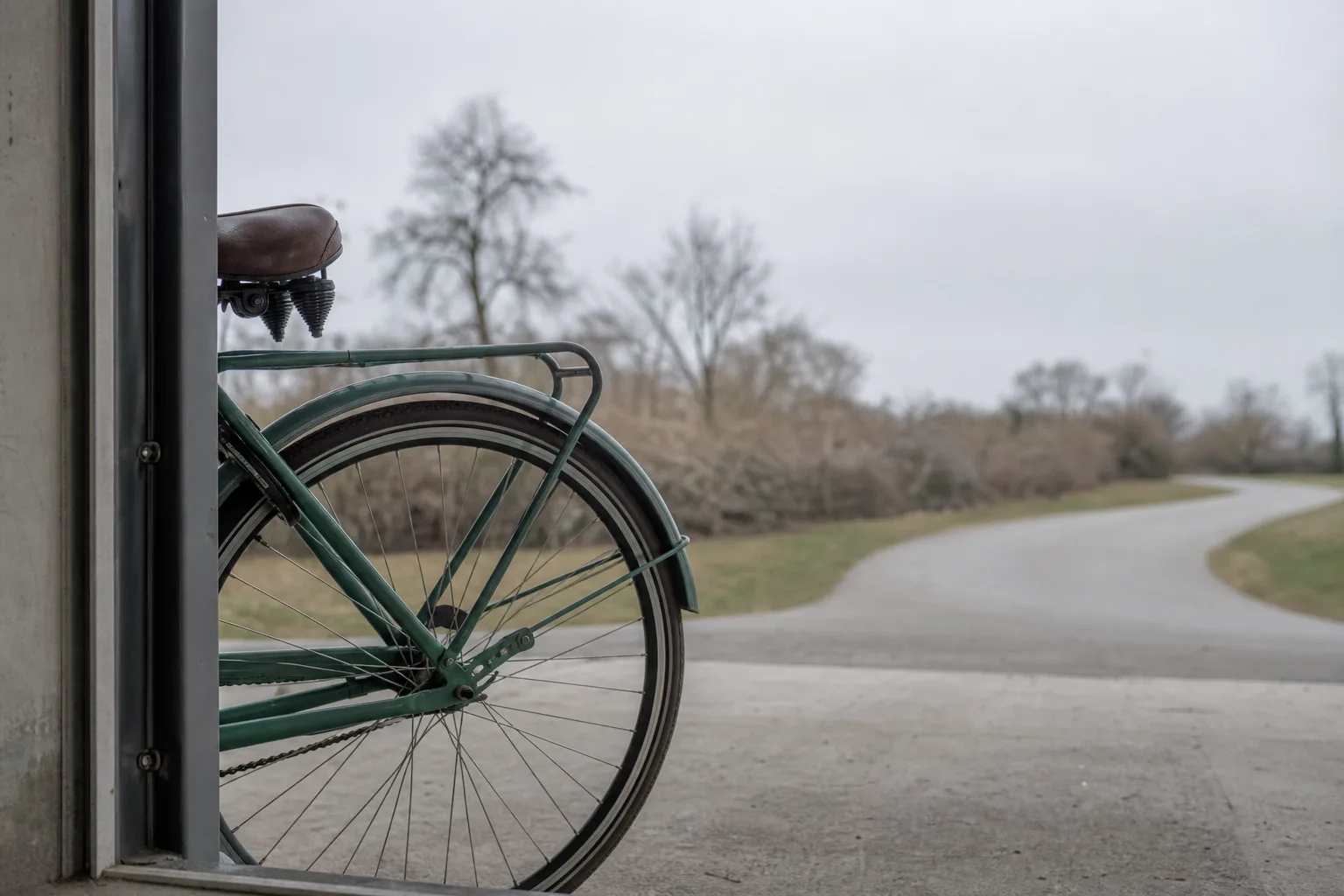
The bike that feels wonderful rolling around a parking lot on a Saturday morning is not the bike you are actually buying, because the parking lot is flat and the route home from the grocery store is not. Cushioned upright bikes carry weight in places road bikes do not: a steel or thick-walled aluminum frame, a sprung saddle, a suspension seatpost, fenders, a rack, a kickstand, and tires wide enough to need real rubber. That weight is fine on the level. It becomes the whole story on a grade of five or six percent, and the gearing is what decides whether that grade is pleasant or humiliating.
One: find out what the lowest gear actually is
Ignore the number of speeds, which tells you almost nothing, and ask instead how low the low gear goes. The plain version is gear inches: divide the teeth on the front chainring by the teeth on the largest rear cog, then multiply by the wheel diameter in inches, roughly 27 for most 700c or 26-inch comfort bikes with fat tires. Around thirty gear inches is a flat-ground low gear. Low twenties is a hill gear. High teens is a gear that lets a heavy bike climb almost anything at walking pace, and on a cushioned bike that is what you want.
Two: understand what a 7-speed hub trades away
Internally geared hubs are genuinely appealing on this kind of bike, since they shift at a standstill, tolerate neglect, and hide the chain inside a case that keeps your pants clean. The trade is range. A common 7-speed hub spreads roughly two and a half times between its lowest and highest gear, while a wide-range derailleur setup with a small chainring and a large cassette cog can spread four times or more. That difference lands entirely at the bottom. If the shop can order the hub with a smaller front chainring, most of the gap closes, and the low gear arrives where you need it.
Three: check whether the frame gives your legs something to push against
Step-through frames solve a real problem for riders with limited hip mobility or anyone carrying groceries in a skirt, and the good ones are engineered around the missing top tube with an oversized downtube or a doubled lower spine. The weak ones flex noticeably when you stand and pull on the bars, which is exactly what you do on a steep pitch, and some of your effort goes into twisting the frame rather than turning the wheel. A mixte-style low step, with twin tubes running from the head tube back to the rear axle, keeps the easy mount and returns the stiffness.
Four: test the hill, not the showroom
Ask to take the bike to a real grade nearby, and pick one that takes at least two or three minutes to climb rather than a short ramp you can carry momentum over. Shift into the lowest gear before you start, not partway up, because a loaded hub or a poorly adjusted derailleur will refuse under load and you want to know that now. Ride it seated. If your cadence collapses below about sixty pedal strokes a minute and your knees start pushing rather than spinning, the gearing is too tall for the bike's weight.
Five: price the fix before you decide
A too-tall low gear is usually correctable, and correcting it at the point of sale is far cheaper than doing it later. A smaller chainring, a larger rear cog, or a cassette swap with a matching derailleur cage are all routine shop work, and a dealer who wants the sale will often absorb part of it. Get the quote in writing before you buy. The Consumer Product Safety Commission oversees safety requirements for bicycles sold in the United States, and any reputable shop making a drivetrain change will keep the braking and reflector setup intact while doing it.
The bike that survives the third month is the one whose lowest gear was chosen for the terrain you actually have, with a frame stiff enough to reward standing and a drivetrain that shifts under load. Check those three things on a real hill, and the weight stops mattering.